 SAND + SEA

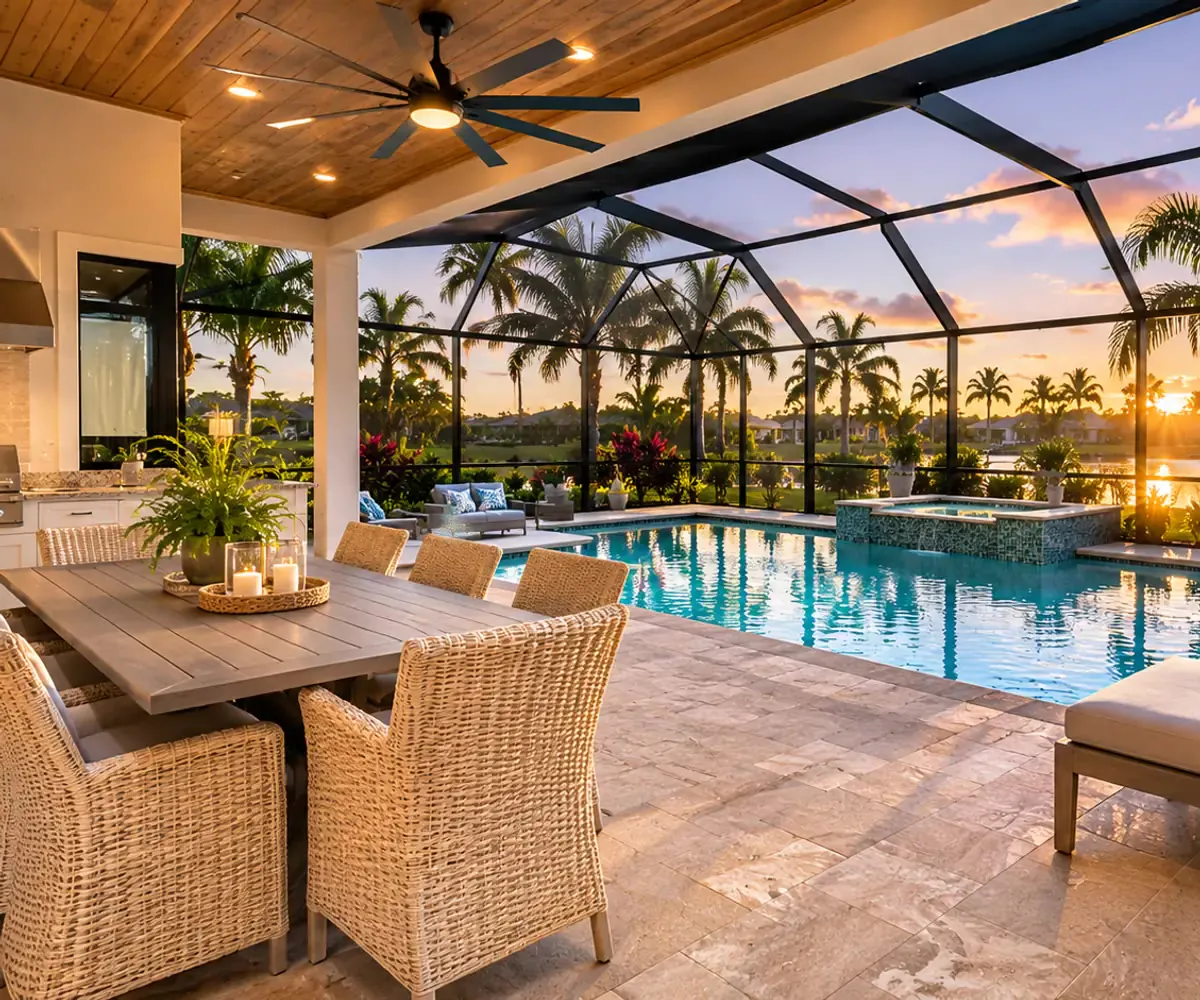
For many buyers, the pool is the reason they are moving to Florida in the first place. Morning laps before work, kids splashing after school, friends gathered on the lanai while the sun goes down over the Gulf. It is easy to fall for a pool. It is also easy to underestimate what it takes to own one. If you are comparing homes in Sarasota, Lakewood Ranch, Venice, Bradenton or North Port, here is an honest look at whether a pool is the right choice for you.
The Lifestyle Case for a Pool
Let us begin with the best reason to buy a pool home: you will use it. In Southwest Florida, swimming season stretches across most of the year, and a pool becomes an extension of your home. It is where you exercise, entertain, cool off after a summer afternoon and spend weekends with visiting family. A pool can replace a gym membership, a lot of vacation spending and a lot of time in the car.
If that sounds like you, a pool is much more than a financial decision. If it does not, if you travel most of the year, do not like being outdoors in the heat or dislike maintenance, a pool may become an expensive backyard ornament. Be honest with yourself about how you really live.
What It Costs to Own a Pool in Florida
A pool is not a one-time purchase. It is a year-round commitment, because heat, rain, sun and falling leaves keep working on it whether you swim or not. Typical costs include:
- Pool service or chemicals: a weekly service is common, and many owners choose it so the water stays balanced and clear
- Electricity: the pump runs for hours every day, and a heater or a salt system adds to the bill
- Water: topping off during hot, dry stretches
- Repairs and equipment: pumps, filters, heaters, cleaners and lights do not last forever
- Resurfacing: the interior finish eventually needs replacement
- Screen and cage repairs: a big one in our area, since storms and age take a toll
- Insurance: a pool can affect your liability coverage and your premium
Most owners spend somewhere in the range of $150 to $450 a month when you combine service, utilities and a little set aside for repairs, depending on the size of the pool, the equipment and whether you do the work yourself. A good rule is to budget for it just as you do your mortgage, taxes and insurance.
Equipment and Surface Age: What to Ask
When you tour a pool home, look past the sparkle in the listing photos. Ask:
- How old are the pump, filter, heater and automation system?
- When was the pool last resurfaced?
- Has there been any leak, crack or major repair?
- Is the screen enclosure in good shape, and when was it last re-screened?
- Is the pool heated, salt or traditional, and what does it cost to run?
- Were the pool and any cage or deck permitted?
Pumps often last roughly five to seven years, heaters around a decade, and a pool surface typically needs replacement every eight to twelve years or so. If the pool is near the end of its life, resurfacing or replacing equipment could be a five-figure expense that you want to factor into your offer.
Do Pools Add Value in Sarasota?
This is the question every buyer and seller asks, and the honest answer is: it depends on the neighborhood. In many Sarasota area neighborhoods, pools are expected, and buying a home without one can limit your future buyer pool. In others, especially in communities with a resort-style amenity center, a private pool matters much less.
There is also a difference between what a pool costs to build and what buyers will pay for it. A new pool and cage can cost tens of thousands of dollars to add, but that does not mean your home is worth that much more once it is finished. Buyers set the market, not the construction invoice. A well-kept pool in the right neighborhood will often help a home stand out and sell faster, but a worn or neglected one can raise concerns and lower interest.
The best way to see what a pool is worth is to compare recent sales of similar homes with and without pools in that exact neighborhood. We pull those comparisons for our buyers, so you know what the premium is before you make an offer.
Buy a Pool Home or Build One Later?
If you really want a pool, you have two paths.
- Buy a home with a pool. You can see the finished product, enjoy it right away and compare the premium to what it would cost and how long it would take to build one. Just make sure you do the due diligence on condition.
- Buy a home without a pool and add one. You get exactly the design you want, but you will wait through permitting and construction, which can take months, and you may not recover the full cost when you sell. Some neighborhoods and HOAs also have rules that affect what you can build.
Many buyers find that buying someone else's pool, when it is in good shape, is the more practical choice.
Insurance and Safety Considerations
A pool adds liability, and Florida takes pool safety seriously. Florida's pool safety law requires barriers and safety features for new pools, and most insurers expect a secure fence or enclosure, a self-latching gate and no diving boards or slides. Before you buy:
- Call your insurance agent early, and ask how the pool, screen enclosure and equipment affect your premium and coverage
- Ask about the deductible for the screen enclosure, since it is often handled differently than the house
- Consider an umbrella policy, which adds liability protection that many pool owners choose
- Confirm the barrier and gate meet requirements and are in good working order
Flood and storm risk matter, too. Floodwater can contaminate a pool and equipment, and insurers often treat flood differently than wind. If the home is in a flood-prone area, see our guide to flood zones in Sarasota before you decide.
Get a Pool Inspection
A general inspection does not cover every aspect of the pool. A dedicated pool inspection, usually costing a couple of hundred dollars, can examine the equipment, the surface, the plumbing lines, the safety features and the enclosure. It is worth it, particularly on older pools. Our guide to 4-point and wind mitigation inspections explains other Florida inspections that matter when you buy.
Life With a Pool in Hurricane Season
Pool owners in Florida learn to prepare for storms. Power outages can stop the pump, and a pool can turn green within days if it is not circulating. Many owners keep a plan in place, such as lowering the water level slightly, securing loose furniture, and hiring a service to get the pool back in shape once the power returns. A generator is a worthwhile investment for some.
A Simple Way to Decide
Ask yourself three questions:
- Will we really use it, most weeks, most of the year?
- Do we have room in the budget for the ongoing costs, and for a surprise repair?
- Does it make sense for this home, in this neighborhood, at this price?
If the answer to all three is yes, a pool can be one of the best parts of living in Southwest Florida. If you would like help comparing pool homes, call or text us at (941) 352-2121, and we will help you choose a home you will love for years.
Frequently Asked Questions
How much does it cost to maintain a pool in Sarasota?
Most owners spend roughly $150 to $450 a month, combining service, chemicals, electricity and a reserve for repairs. The amount depends on the size of the pool, the age of the equipment, and whether the pool is heated.
Does a pool increase home value in Florida?
Often it helps, especially in neighborhoods where pools are common, but it rarely returns the full cost of building one. The best measure is what comparable pool homes sell for in the same neighborhood.
Does a pool raise homeowners insurance in Florida?
It can, mainly because of liability exposure. Insurers typically expect a fence or enclosure and a self-latching gate. Talk to your insurance agent before you close so there are no surprises.
What is a pool cage and is it covered by insurance?
A pool cage, or screen enclosure, is the screened structure around the pool and lanai. Coverage varies, and many policies treat it differently from the house, so ask about coverage limits and deductibles.
Should I get a separate pool inspection?
Yes, we recommend it. A pool inspection checks equipment, surface, safety features and the enclosure, and can reveal costly issues that a general inspection does not cover.